Conclusion
As a conclusion, development of
remote sensing walker can be considered as successful. Handicapped Walker With Remote Control is a walking support
system or assistive device that is capable of supporting people with walking
difficulties such as elderly, handicapped persons and persons with leg injuries
such as under rehabilitation. To develop a remote sensing walker it involved
two main parts, which are mechanical part and electrical or electronic part.
The mechanical part consists of a support frame, control box, two castors and
two wheels with motor attached to it and in the electrical or electronic
circuit has the brain of the Handicapped Walker With Remote Control that is
microcontroller, which is part of the control circuit, controls the movement of
the two motors in which consequently controls the direction of the Handicapped
Walker With Remote Control. There are two input mechanisms of the Handicapped
Walker With Remote Control in which the user can control to move and direct the
Handicapped Walker With Remote Control that are on-board buttons and handheld
remote control. The on-board buttons and handheld remote control navigates the Handicapped
Walker With Remote Control to move in various directions that are left, right,
forward, and reverse. To further enhance the capability of Handicapped Walker
With Remote Control to
detect obstacle in front, the Handicapped Walker With Remote Control is
equipped with two photo-electronic sensors at the front of support frame.
Immediately after an obstacle is detected, the two motors will automatically
halt. The main advantage of Handicapped Walker With Remote Control is that it
can be remotely control using radio frequency remote control in which it is
capable to be parked out of the way and return back to the user when the user
is ready to leave. The design of the mechanical structure is drawn using the
Solid Work software to make the technical drawing in 3D.However, to construct
the remote sensing walker, the electrical and electronic section is also
important, because it is the main part to control the function of this project.
All of the circuits are drawn using the Express PCB software to construct the
circuit design. Both of this part is integrated to make the tested and to
ensure the functionality of the integration of this project and the result is
successful.


Suggestion for Further Works
Although the remote sensing walker
that has being developed was able to perform the required task, it still can be
improved. The improvement can be made in mechanical and electrical section. The
mechanical sections that can be improved are:
i.
Mechanical structure
ii.
Control panel box
The current material of this walker
is aluminum hollow bar which this material is thin and supple and causes the
structure of walker not rigid. The rigidity of the mechanical structure is very
important because they have to sustained the load that are subjected to them
especially the frame of the walker. To ensure that the frame is rigid, proper
material selection has being done (suggestion is square hollow steel).
Beside that, the
control panel box is too big and it can affect the stability of this walker
while operate or movement. For suggestion, the control panel box must designed
according to suitability and also consider security features. For this project,
the electrical part also must be improved are:
i.
Hand switch
ii.
Wiring
Design of a hand
switch is not suitable. The design of this switch is too big and difficult to
press. The purpose of hand switch is to control the movement of the walker. To
solve for this problem, the joystick is suitable to replace it. The wiring of
this walker also need improve and for suggestion the suitable trunk must used
so that this walker will look nice and the safety can be improve.
REFERENCES
1stSenior
Care, (2007). “Push Walker
1stSeniorCare,
(2007). “Lift Walker
Allegro Medical,
(1997). “Aluminum Rolling
Walker Rollator.” [Online].Available at: http://www.allegromedical.com/walkers-c516/aluminum-rollator-with-6-wheels-red-p554761.html (Accessed: 12 August 2016).
Bartelt, T.
(2006). “Industrial Control
Electronic:Devices, System, and Application.” New York
Beginning
RC, (2001). “Electronic Speed Controller.” [Online].Available at: http://www.beginningrc.com/img-rc/_t_27_1-esc_speed_controller.jpg
(Accessed: 30 August 2016).
Cytron,
(2006). “Lead-acid.”
[Online].Available at:
http://www.cytron.com.my/listProductCategory.asp?cid=99
(Accessed: 31 August 2016).
Cytron,
(2006). “Wheel” [Online].Available at: http://www.cytron.com.my/listProductCategory.asp?cid=278
(Accessed: 2 September 2016).
Boye,
D. (2008) “Rolling Friction.” [Online].available at: http://webphysics.davidson.edu/faculty/dmb/PY430/Friction/rolling.html
(Accessed: 1 October 2016).
Dynetic,
(1972). “Gearmotor.” [Online].Available at: http://www.dynetic.com/gearmotors.htm (Accessed:
1 October 2016).
Fauzi, M. (2004).
“Microcontroller Interfacing Circuit.” Kuala
Lumpur
Groover,M.P.
(2008). “Automation, Production System,
and Computer-Integrated Manufacturing.”United States
Lathrop, J.
(1996). “Powered Walker U.S.
Lobo Auto Parts Supply.
“Power Window motor.” [Online].Available at: mykomo.com/komopwm.html (Accessed:
27 October 2016).
Made-in-China.com.” Polyolefin Wheels.”
[Online].Available at: www.made-in-china.com (Accessed:
27 October 2016).
Mahoney,E.F.
(2006). “Electricity, Electronics, and Wiring Diagram for HVAC/R.”United State:
Pearson Prentice hall, pp.84, pp.85, pp.134, pp.173, pp.390, pp.391.
McFarland,G.
(2006). “Microcontroller Design.”United States
Muiza. “Modern Walker
Omron.
“Electrical and Electronic Relay.”
[Online].Available at:
http://www.omron-ap.com/product_info/LY/relay_ly_pic01_01oct2000.jpg
(Accessed: 21 October 2016).
Omron.
“Inductive Proximity Sensor.” [Online].Available at:http://www.omronap.com.my/product_info/E2FQ/e2fq_proximity_sensor_small.jpg
(Accessed: 21 October 2016).
Pepperl + Fuchs,
Inc. “Photoelectric Sensor.” [Online]. Available at: http://www.am.pepperl-fuchs.com/pdf/documents/photo-rect-housings.jpg (Accessed: 3 September 2016).
Rakes, C. D.
(1997).
“DC Motor Drive
Remote Control
Technology, Inc.
“Wireless Remote Control.”
[Online].Available at: http://www.remotecontroltech.com/ (Accessed: 2 September 2016).
Society of Robots,
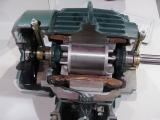
(2005). “AC Motor” [Online].Available at: http://www.societyofrobots.com/images/actuators_acmotor1.jpg
(Accessed: 21 October 2016).
Tamiya.“Mechanical
Speed Controller.” [Online].Available at: www.tamiya.com
(Accessed: 21
October 2016).
Tamiya.“RF Remote
Control.” [Online].Available at:
www.tamiya.com (Accessed: 21 October
2016).
Ulrich, (1993).
“Aluminum Profile.” [Online].Available at: http://www.ullrich-aluminium.co.nz/profile/profile.htm
(Accessed: 21 October 2016).
Vasilis,S. (
2004).“4 Channel RF
Remote Control.” [Online].Available at: http://www.serasidis.gr (Accessed: 21 October 2016).
Vortex
Technologies Ltd.”Square Hollow Steel.” [Online].Available at: http://www.vortexindia.net/aboutus.html
(Accessed: 21 October 2016).


No comments:
Post a Comment